

Table of Contents
Introduction
Toyota auto insurance is designed to provide coverage tailored to the specific needs of Toyota owners, whether they drive a sedan, SUV, or hybrid model. The average cost of insuring a Toyota varies but generally falls around $2,461 per year, with prices depending on factors like coverage level, driving habits, and vehicle features.
Many providers offer discounts for safe driving, bundling policies, or having safety features on the vehicle, helping lower overall costs. Understanding these options and how rates are calculated can help drivers find reliable protection without overpaying.
Understanding Toyota Auto Insurance
Toyota Auto Insurance offers tailored coverage designed specifically for Toyota vehicle owners. It emphasizes partnerships with national providers, safety feature discounts, and policies that align with Toyota’s standards. The options, requirements, and benefits reflect Toyota’s goal to enhance protection and ownership experience. According to the Insurance Information Institute (III), understanding your policy terms is key to making smart coverage decisions.
What Sets Toyota Auto Insurance Apart
Toyota Auto Insurance stands out because it is managed through Toyota Insurance Management Solutions (TIMS), which collaborates with multiple established insurers. This allows Toyota owners to access policies that are specialized for their specific vehicles rather than generic coverage.
Key differentiators include discounts for drivers with good records, safe driving habits, and Toyota’s advanced safety features. Additionally, bundling home and auto policies can reduce overall costs. Usage-based insurance options track driving behavior to adjust premiums more fairly.
The program also prioritizes repairs using Toyota Genuine Parts, helping maintain vehicle integrity and resale value. This direct focus on Toyota-specific factors benefits drivers by offering more tailored coverage and cost-saving possibilities.

Toyota’s Approach to Coverage
Toyota Auto Insurance provides a range of coverages from liability and collision to comprehensive policies that include theft and weather damage. The program allows customization so owners can select coverages based on their needs and budget.
Discounts often reward responsible driving and vehicle safety features like pre-collision systems. Payment options include full premium payments or installment plans. Customers can also benefit from bundling multiple insurance types under Toyota’s program to lower premiums.
Toyota emphasizes transparent communication and easy claims processing through their platform and partners. The goal is to streamline insurance management while ensuring coverage aligns with Toyota vehicles’ unique requirements.
Eligibility Requirements
To qualify for Toyota Auto Insurance, the primary requirement is ownership or lease of a Toyota vehicle. Eligibility also depends on an applicant meeting insurer criteria such as age, driving history, and location.
Drivers with clean records and limited claims history may receive better rates. Some discounts target specific groups, including students and those with telematics devices for usage-based insurance plans.
Applicants must provide vehicle details and personal information for accurate rate calculations. Toyota also requires insured vehicles to adhere to safety and maintenance standards to remain eligible for certain discounts.
Combined, these factors determine eligibility and available pricing tiers tailored for Toyota owners.
Types of Coverage Offered
Toyota auto insurance includes several coverage types tailored to meet different needs and protect drivers from various risks. These coverages range from basic legal requirements to more extensive protection against damage and theft.
Liability Coverage Options
Liability coverage is mandatory in most states and covers damages the insured causes to others in an accident. It includes two parts: bodily injury liability and property damage liability.
Bodily injury liability pays for medical expenses, lost wages, and legal fees if the policyholder is responsible for someone else’s injuries. Property damage liability covers repairs or replacement of another person’s vehicle or property.
Coverage limits vary, with common states requiring minimum amounts such as $25,000 per person for bodily injury and $50,000 per accident. Higher limits offer better financial protection but cost more in premiums.
Comprehensive Protection
Comprehensive coverage protects a Toyota against damage not caused by a collision. This includes events such as theft, vandalism, natural disasters, and hitting an animal.
This coverage generally pays for repairs or replacement after incidents like hail damage or windshield cracks. It often comes with a deductible, which is the amount the insured pays before the insurer covers the rest.
Comprehensive insurance is not legally required but is recommended for newer models, hybrid cars, or vehicles with high market value to prevent costly repairs.
Collision Coverage
Collision coverage pays for damage to the insured Toyota caused by a collision with another vehicle or object, regardless of fault. This coverage is critical for protecting the vehicle itself and is often required by lenders or lease agreements.
It covers repairs or replacement after accidents like hitting a guardrail or another car. Like comprehensive coverage, it includes a deductible, affecting the premium cost and out-of-pocket expenses.
Drivers should weigh the cost of collision coverage against the value of their Toyota, as the premiums might not be cost-effective for older vehicles with lower market values.
Exclusive Benefits for Toyota Owners
Toyota auto insurance provides tailored features that enhance protection and service. Owners receive coverage that supports vehicle integrity and access to specialized networks and support, improving their overall insurance experience. Visit the Official Toyota Insurance Management Solutions (TIMS) website to explore their partnerships and coverage details.
OEM Parts Guarantee
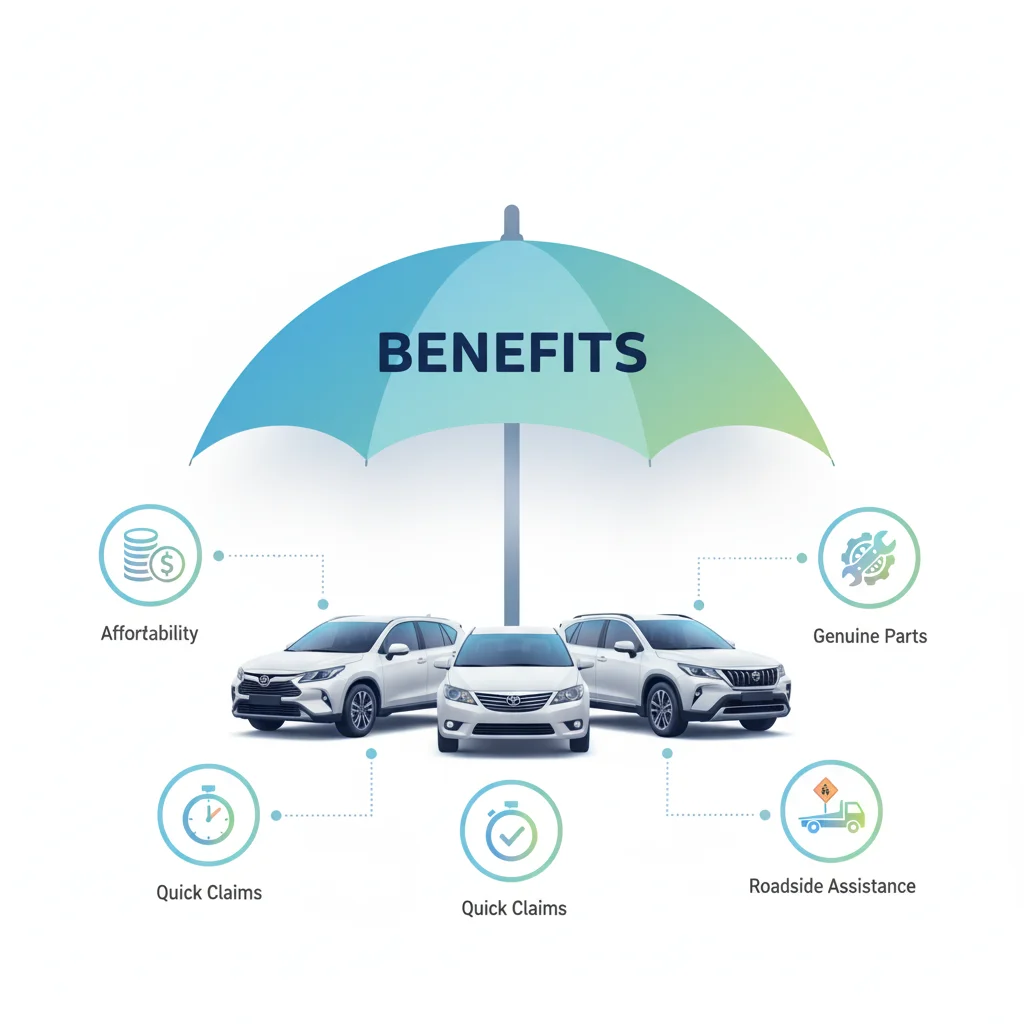
One key advantage is the use of Toyota Original Equipment Manufacturer (OEM) parts for repairs. This ensures replacement parts match the vehicle’s original specifications for fit, quality, and durability. Using OEM parts helps maintain the car’s safety features and resale value.
Insurers affiliated with Toyota often guarantee repairs with these genuine components. This reduces the risk of future mechanical issues caused by inferior aftermarket parts, offering peace of mind to owners focused on maintaining their vehicle’s condition.
Toyota Repair Network Access
Toyota auto insurance grants access to a certified repair network specifically trained to service Toyota vehicles. This network includes authorized dealerships and repair shops that follow Toyota’s standards for repair quality and customer service.
Using network shops can streamline claim processes, as these providers are familiar with Toyota insurance guidelines. Customers benefit from faster, more reliable repairs performed by technicians experienced with Toyota models.
Customer Support Services
Toyota Insurance offers dedicated customer support tailored to Toyota owners’ needs. This includes assistance with claims management, policy questions, and coverage customization.
Support teams are knowledgeable about Toyota-specific discounts and coverage options. They provide guidance to help customers maximize benefits such as bundled policies, safe driver discounts, or usage-based insurance programs. Driveaway Insurance Explained
Cost Factors and Pricing
Toyota auto insurance costs vary based on several measurable factors. Key elements influencing pricing include how insurers assess risk, available discounts tailored to Toyota owners, and how the specific model and year affect rates. A Consumer Reports study suggests comparing at least three quotes to secure fair insurance rates.
How Premiums Are Calculated
Insurance premiums for Toyota vehicles are calculated using data on the driver and the vehicle. Important factors include the driver’s age, driving record, credit history, and location. Insurers also consider how much the driver uses the car and the coverage limits chosen.
Vehicle-related factors such as safety ratings, repair costs, and engine size directly impact premiums. Toyota often benefits from strong safety records, which can reduce costs. However, higher repair expenses or larger engines tend to raise rates. Overall, data-driven risk assessment by insurers pinpoints how likely a driver or vehicle model is to file claims.
Discounts for Toyota Drivers
Many insurance companies offer discounts specifically for Toyota owners. These can include savings for installing anti-theft devices, bundling policies, or maintaining a clean driving record. Some insurers reward drivers with hybrid or fuel-efficient Toyota models with lower premiums.
Safety features common in Toyota vehicles, such as advanced driver assistance systems, may qualify drivers for additional discounts. Students or military personnel who drive Toyota cars often receive special pricing as well. Checking multiple providers for Toyota-specific incentives can help reduce insurance expenses.
Impact of Model and Year
The particular Toyota model and its year of manufacture influence insurance costs significantly. Newer models with cutting-edge safety features and lower theft rates generally cost less to insure. Models like the Toyota Prius, known for fuel efficiency and strong safety ratings, often have competitive premiums.
Older vehicles might have higher repair costs or lack modern safety technology, increasing insurance rates. Additionally, some models, such as trucks or those with larger engines, may result in higher premiums due to increased risk or repair expenses. Insurance rates typically reflect the balance between safety, repair costs, and overall vehicle value.
My Experience with Toyota Auto Insurance
Over the past few years, I’ve come across several Toyota owners looking for reliable and affordable coverage, and one thing I’ve noticed is how much smoother the process is with Toyota Auto Insurance compared to generic providers. A close friend of mine switched recently, and what stood out was how fast the claims process was and how easily Toyota handled repairs through their certified network.
I personally like how Toyota focuses on using genuine parts for every repair, it’s not just about fixing the car; it’s about keeping it in the best condition possible. The Toyota App also makes things simple, from checking coverage to tracking claims.
While Toyota’s insurance might not always be the cheapest, the peace of mind it brings is worth it. If you own a Toyota and want a dependable policy that truly understands your car, this program is definitely worth considering.
Bonus Tip:
Always compare at least three different providers before finalizing your policy. Even within Toyota’s insurance network, rates and benefits can vary depending on your state, model, and driving history. Taking a few minutes to compare can save you hundreds every year.
How to Purchase Toyota Auto Insurance
Purchasing Toyota auto insurance involves selecting the right coverage and providing necessary information. The process requires careful preparation and understanding of documentation to ensure a smooth transaction.
Application Process
To apply for Toyota auto insurance, the buyer must first collect quotes from various insurers to compare rates and coverage options. Many insurance providers offer online applications, allowing users to input vehicle details, driving history, and coverage preferences easily.
Key steps include:
- Selecting the Toyota model and year
- Providing personal identification and driving record
- Choosing coverage types (liability, comprehensive, collision, etc.)
- Specifying deductibles and optional add-ons
After submitting the application, the insurer reviews the information to determine eligibility and final premium costs. Some companies may offer usage-based insurance, which requires consent to share driving data for potential discounts.
Required Documentation
Insurers typically require specific documents to finalize Toyota auto insurance. The essential paperwork includes:
- Vehicle registration to confirm ownership
- Driver’s license for each insured driver
- Proof of address, such as a utility bill
- Previous insurance policy details (if applicable)
Additional documentation might include a credit report or vehicle inspection report, depending on the insurer’s policy requirements. Having all necessary documents ready reduces application delays and helps avoid coverage gaps.
Toyota Insurance and Connected Services
Toyota Insurance offers options that leverage driving data to tailor coverage and potentially lower premiums. Its services also connect directly with the Toyota App to enhance convenience and safety for vehicle owners.
Telematics and Usage-Based Options
Toyota Insurance uses telematics technology through its Insure Connect program, powered by Toyota Insurance Management Solutions (TIMS). Drivers with eligible vehicles can opt in to share driving data, such as speed, mileage, and braking patterns, which informs personalized insurance rates.
This usage-based insurance (UBI) model rewards safer driving habits by offering discounts based on actual driving behavior. Participation requires consent to data sharing via the Insure Connect app. It is designed to provide flexibility and cost savings, especially for drivers who typically maintain careful habits or have low vehicle usage.
Integration with Toyota App
Toyota Connected Services integrates directly with the Toyota App to provide vehicle owners with a range of features. These include real-time vehicle status updates, remote control functions, and alerts to enhance safety and convenience.
By linking insurance data and vehicle telematics through the app, Toyota aims to streamline user experience. This integration enables users to manage insurance settings, monitor driving data, and receive personalized feedback—all from one platform. It supports ongoing engagement with the vehicle’s performance and insurance benefits.
Claims Process and Support
Toyota auto insurance provides a structured and clear process for handling claims. Policyholders can expect straightforward steps for filing claims, guidance through vehicle repairs or replacements, and reliable customer service support throughout. The National Association of Insurance Commissioners (NAIC) provides detailed guidance on filing car insurance claims efficiently.

Filing a Claim
To file a claim with Toyota auto insurance, the insured should report the incident to their insurance company as soon as possible. They can initiate the claim online or by phone at 1-800-255-8713, where representatives assist in starting or updating the claim.
Policyholders need to gather and submit necessary documentation, including accident reports and repair estimates. Insurance adjusters are assigned to evaluate the damage and determine the coverage amount based on these documents.
For vehicles financed or leased through Toyota Financial Services, contacting 1-800-874-8822 is recommended to ensure the claim process aligns with financing requirements. Keeping detailed records of the incident and communications speeds up claim approval.
Repair and Replacement Process
After claim approval, Toyota coordinates with authorized repair centers to maintain quality standards. Repair facilities use genuine Toyota parts to ensure safety and vehicle integrity.
If the vehicle is deemed a total loss, the insurance provider will evaluate its current market value to settle compensation. This process protects the policyholder from financial shortfalls related to repair costs exceeding the vehicle’s worth.
Regular communication is encouraged between the policyholder and the claims adjuster to track repair progress. Documentation such as repair invoices and status updates should be kept for reference.
Customer Service Experience
Toyota auto insurance emphasizes professional support through dedicated customer service teams. Assistance is available via toll-free lines, with representatives trained to guide policyholders through each step of the claims process.
Service hours typically range from 8:00 a.m. to 8:00 p.m., Monday through Friday. This availability helps policyholders receive timely answers and updates, reducing uncertainty during stressful situations.
Toyota also provides online portals for claim submission and status tracking, allowing convenient access to claim details and documentation. This digital support complements phone assistance, offering flexible communication methods.
Comparing Toyota Auto Insurance to Other Providers
Toyota auto insurance varies in features and pricing compared to other providers. The differences often relate to coverage options and cost efficiencies. Understanding these details helps drivers choose the best policy for their needs.
Feature Comparison
Toyota auto insurance policies typically include standard coverage such as liability, collision, and comprehensive protection. Some providers offer unique benefits tailored for Toyota vehicles, like discounts for hybrid models or advanced safety features.
Other insurance companies may enhance their offerings with services like roadside assistance, accident forgiveness, or new car replacement.
Toyota-focused insurance also often incorporates manufacturer-backed safety technologies, which can influence both premiums and coverage terms. When comparing providers, attention to these specialized features can affect overall value.
Pricing Differences
Toyota insurance costs generally range from $399 to over $3,300 annually, depending on the model and coverage level. Compared to other brands, Toyota insurance is often more affordable, with some providers ranking it in the top 10 for low premiums.
Prices can start as low as $30–$40 per month for minimum coverage from companies like Geico or State Farm. Full coverage averages around $193 per month but can drop to $83 in cases like through Travelers.
Drivers should compare quotes because pricing depends on factors such as driving record, mileage, and credit history, which vary widely among providers.
Common Policy Exclusions and Limitations
Toyota auto insurance policies contain specific conditions that restrict coverage in certain scenarios. These include clearly defined exclusions and limitations related to vehicle use, repair authorizations, and custom modifications.
Typical Exclusions
Most Toyota auto insurance policies exclude coverage for damages caused by intentional acts, racing, or using the vehicle for commercial purposes without proper endorsement.
Claims related to damage from wear and tear or mechanical failures are also commonly excluded. Repairs done without prior authorization from the insurer will not be covered, which emphasizes the importance of following claim procedures.
Additionally, losses resulting from natural disasters like floods, earthquakes, or acts of war may be excluded unless additional coverages are purchased.
Limitations for Customizations
Standard Toyota insurance policies often exclude coverage for aftermarket modifications or custom parts unless separately declared and approved.
Modifications that change the vehicle’s performance, appearance, or value may require riders or endorsements to ensure protection. Failure to notify the insurer about these changes can result in denied claims.
Limits on coverage amounts for custom parts and accessories are typically lower than the base vehicle’s coverage, so policyholders should verify these limits carefully.
Tips for Maximizing Coverage Value
Improving the value of Toyota auto insurance involves strategic decisions that reduce costs without compromising essential protection. Two primary approaches address how to save money and maintain adequate coverage effectively.
Bundling Policies
Combining multiple insurance policies under one provider can yield significant savings. Drivers who have Toyota auto insurance alongside homeowners or renters insurance may qualify for discounts by bundling these plans.
Bundling simplifies bill payments and often results in a reduced premium on each policy. Providers like Nationwide and Geico commonly offer these discounts, which can amount to 10% to 25% off total insurance costs.
It’s important to verify the compatibility of different policies and ask insurers about specific bundle offers. Maintaining separate coverages might sometimes cost more in the long run, especially if bundling rewards are substantial.
Choosing the Right Deductible
The deductible is the amount a driver pays out of pocket before insurance coverage begins after a claim. Selecting an appropriate deductible balances premium costs and potential expenses after an accident.
A higher deductible lowers monthly premiums but increases financial risk if a claim occurs. Conversely, a lower deductible means higher premiums but less cost during a claim.
Toyota owners should assess their financial situation and driving habits. For example, a safe driver with emergency savings might benefit from a higher deductible, optimizing premium savings over time.
Adjusting deductibles is a straightforward way to influence annual insurance costs while aligning coverage with personal risk tolerance and budget constraints.

FAQs About Toyota Auto Insurance
Q1: What makes Toyota Auto Insurance unique?
Toyota Auto Insurance offers exclusive discounts and coverage designed specifically for Toyota models, ensuring access to certified repair centers and genuine parts.
Q2: Does Toyota Auto Insurance cost more than other insurers?
No, it’s often more affordable, thanks to Toyota’s safety record and multiple discount options.
Q3: Can I bundle Toyota Auto Insurance with home coverage?
Yes, bundling with homeowners or renters insurance can reduce your overall premiums by up to 20%.
Q4: What is the claim process like for Toyota Auto Insurance?
Claims can be filed online or via Toyota’s dedicated helpline, with access to certified Toyota repair centers for faster service.
Q5: Is usage-based insurance available for Toyota owners?
Yes, Toyota offers telematics-based discounts through its Insure Connect program for safe and low-mileage drivers.
Get your Toyota Auto Insurance quote today on GoAssura.com and enjoy peace of mind every time you drive.
is a content strategist and insurance researcher at GoAssura. With years of experience studying vehicle and business insurance, he helps readers understand complex coverage options in simple, practical ways. His focus is on making insurance knowledge accessible and useful for everyone.
